Home › Foundation Crack Repair
Foundation Crack Repair in Barrie
Most leaking cracks in poured concrete walls are fixed from inside in a few hours — injected under pressure so the repair fills the crack through the full thickness of the wall, not just the surface.
Why poured walls crack — and leak
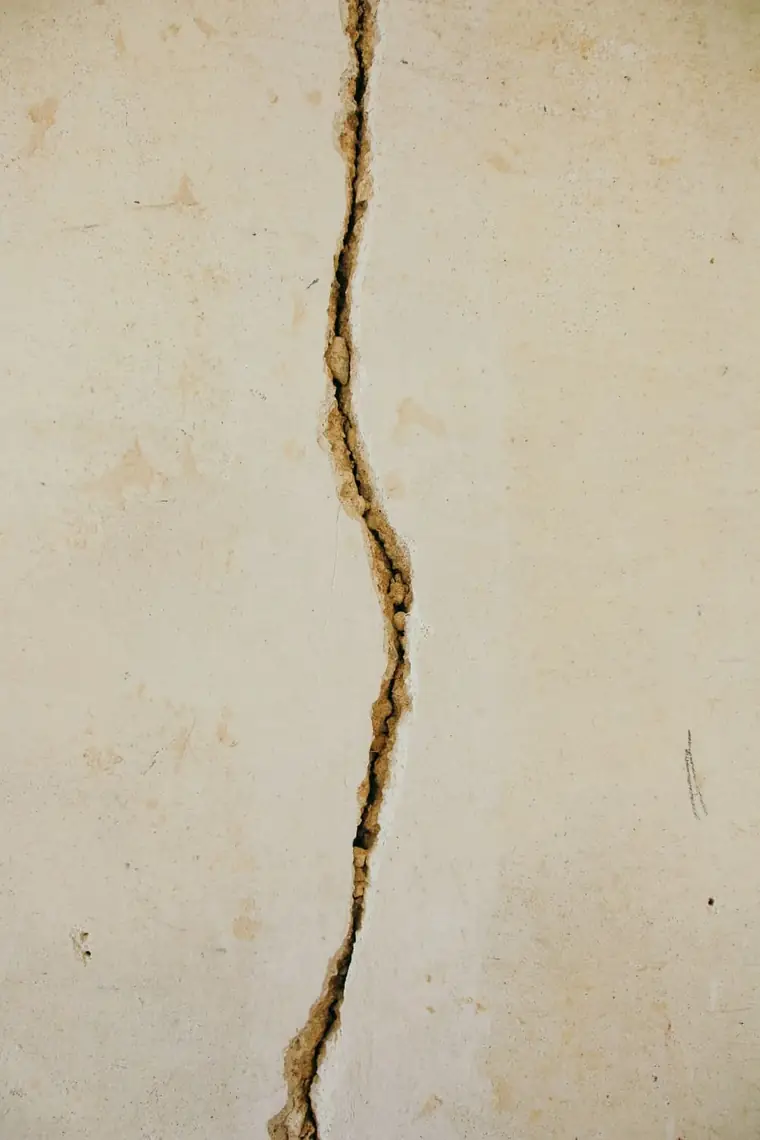
Concrete shrinks slightly as it cures, and foundations settle as the soil beneath them consolidates. The result is that vertical or slightly diagonal cracks are common in poured walls — most houses have at least one, and many never leak.
The trouble starts when a crack goes all the way through the wall and the soil outside is wet. Every spring melt and every hard rain, hydrostatic pressure pushes water through. Freeze-thaw cycles then work on the crack each winter, so a damp hairline this year can be a running leak in a few years.
Surface patches — hydraulic cement, caulking, paint — fail because they only bridge the inside face. The water is still in the crack behind the patch, pushing and freezing until it finds an edge.
How injection repair works
- Assessment of the crack
Width, direction, movement history and moisture tell us whether this is a shrinkage crack (injectable) or a structural symptom that needs more than sealing.
- Ports and surface seal
Injection ports are set along the crack every 8–12 inches and the face is sealed between them, so the resin has nowhere to go but into the wall.
- Pressure injection
Expanding polyurethane resin is injected port by port, bottom up, until it fills the crack front to back. The resin reacts with water, expands, and stays flexible after curing.
- Finish
Ports are removed and the surface is dressed. The repair is ready immediately — no cure time before the next storm.
Polyurethane or epoxy? Polyurethane is the leak-stopper: it expands into wet cracks and flexes with seasonal movement. Epoxy is structural glue: it welds the two sides of a dry, stable crack back into one piece. We choose based on what the crack is doing — and tell you why.
Which cracks are serious?
Facts homeowners ask about
- Most crack repairs are done from inside — no digging, no disturbance outside, done in hours.
- A dry crack today is still a candidate if there is staining or efflorescence around it: that is evidence water has used it before and will again.
- Cracks around basement windows are common — the opening concentrates shrinkage stress at its corners. Injectable like any other vertical crack.
- New homes crack too. Shrinkage cracks typically appear in the first years after a pour; being new does not mean being immune.
- If several cracks leak at once, the real story is usually drainage — saturated soil against the wall. We will say so instead of just injecting and waving goodbye.
Crack repair questions
How long does a crack injection take?
A single straightforward crack is typically a two-to-three-hour visit, and the repair is effective immediately.
Can you inject a crack that is actively leaking?
Yes — polyurethane resin is designed for wet conditions; it reacts with the water and expands to fill the crack. An active leak does not have to wait for dry weather.
Will the crack come back?
The injected crack itself is filled through the wall and stays filled — the flexible resin moves with normal seasonal expansion. New cracks can still form elsewhere; if a wall keeps producing them, that points to a settlement or pressure problem worth investigating.
My basement is finished — can you still fix a crack behind drywall?
Yes, but a small section of the finished wall needs to be opened to expose the crack. We keep the opening as small as the repair allows; patching the drywall afterwards is usually a simple job.
Often part of the same fix
One crack should not cost you a renovation
Send us a photo of the crack — we will tell you what it likely is, then confirm on site and fix it, usually the same visit.