Home › Weeping Tile & Drainage
Weeping Tile & Drainage Systems in Barrie
Weeping tile is the buried drain that decides whether ground water flows away from your footing or sits against it. When it silts up or collapses, the basement above it starts losing — slowly, then suddenly.
What weeping tile is — and why yours may be done
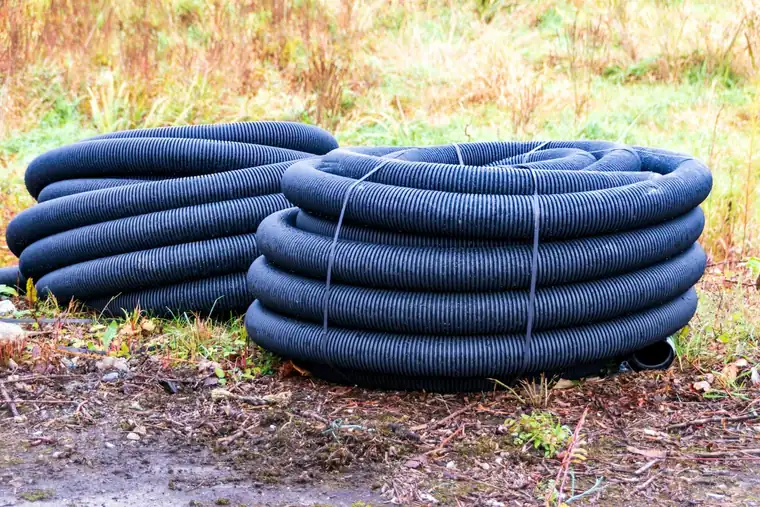
Around the footing of your foundation runs a perforated pipe — the weeping tile (the name survives from the days when it really was short clay tiles laid end to end). Its job is simple: collect the ground water that reaches the bottom of your foundation and carry it away to a sump or storm connection before it builds pressure.
Homes built before roughly the 1980s often still have the original clay tile. Sections shift, roots find the joints, and fine soil washes in until the drain is a buried tube of mud. Newer corrugated plastic tile lasts longer but still clogs with sediment and iron ochre where conditions feed it.
A dead footing drain shows up indoors as the classic pressure symptoms: water at the wall-floor joint, damp slab, a sump that never runs even in the melt — because nothing is delivering water to it anymore.
Drainage services we provide
Weeping tile replacement
Excavate to the footing, remove the failed tile, and lay new perforated pipe wrapped in filter cloth on washed gravel, connected to a sump or storm service. Usually combined with exterior membrane work — the trench is already open.
Window well drains
A window well without a drain is a bucket against your wall. We install or clear well drains tied into the footing tile, add clean stone, and fit covers where wells collect leaves and snow.
Downspout management
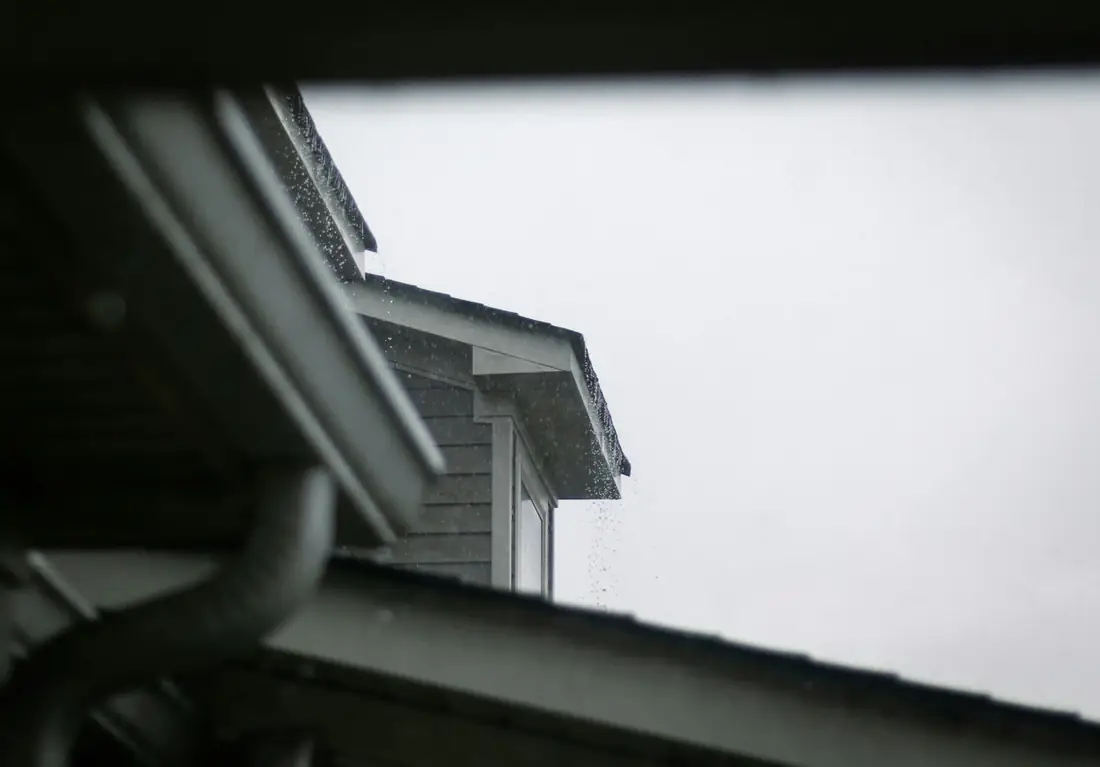
One roof downspout can shed hundreds of litres in a single storm. We extend and redirect downspouts so roof water is released well away from the foundation instead of beside it.
Grading correction
Soil around a house settles over the years until the lot slopes back toward the walls. We rebuild the grade to fall away from the foundation — the cheapest drainage improvement a house can get.
Surface water first, ground water second
Not every wet basement needs excavation. Water management has a natural order, and we quote it in this order:
- Stop feeding the soil
Downspouts and grading decide how much roof and surface water soaks in beside the wall. Fixing them costs the least and sometimes solves the whole problem.
- Give collected water an exit
Window well drains and a healthy sump system deal with the water that concentrates at known points.
- Rebuild the buried drainage
When the footing tile itself is dead, replacement is the structural fix — and the moment to add an exterior membrane while the trench is open.
We check the simple causes first. If your problem turns out to be a crushed downspout extension and two low spots in the grade, that is what the quote will say — not an excavation you did not need.
What failing drainage looks like
Often part of the same fix
Rebuild the drainage your house was supposed to have
A free assessment maps where the water comes from, where it should go, and the least invasive way to get it there — in writing.